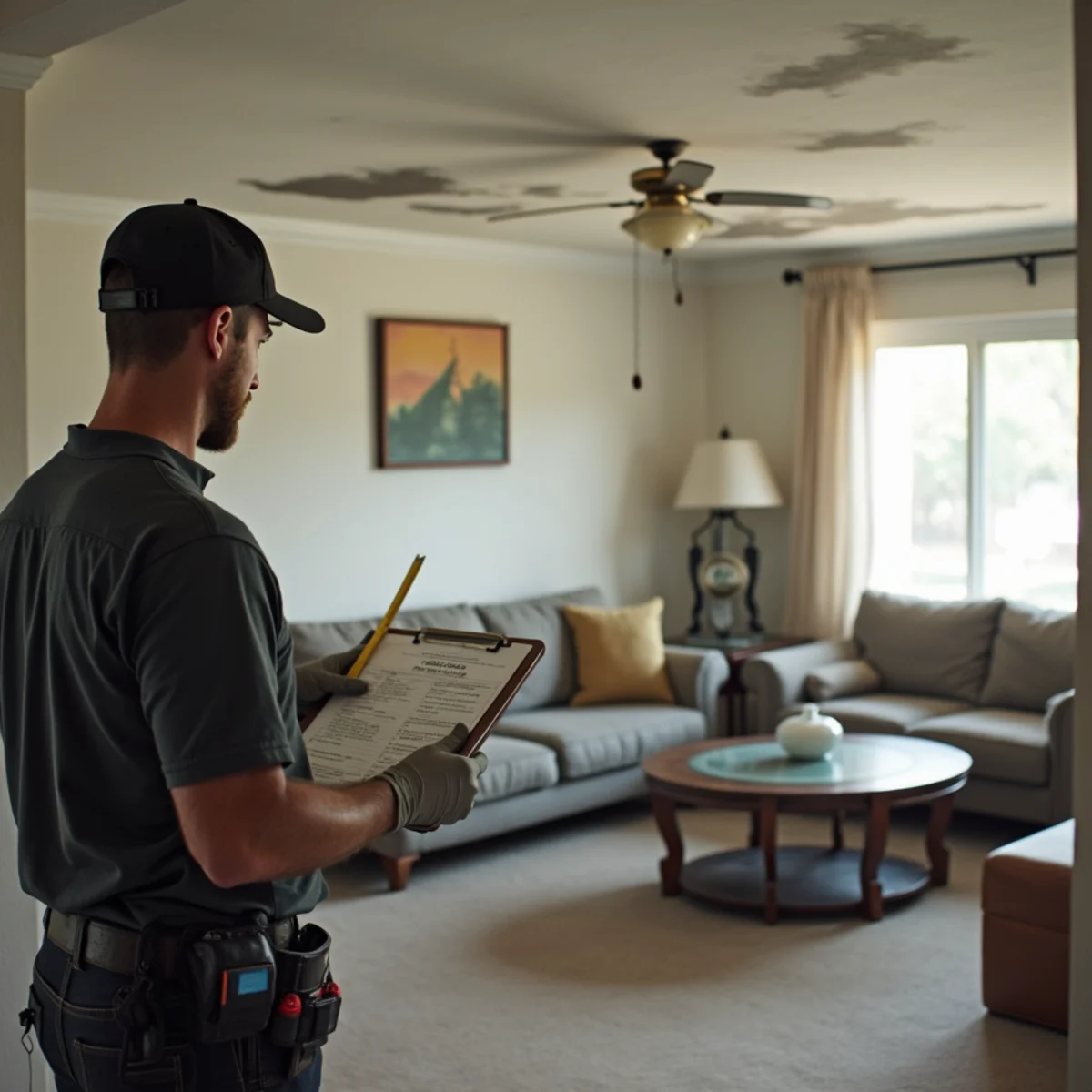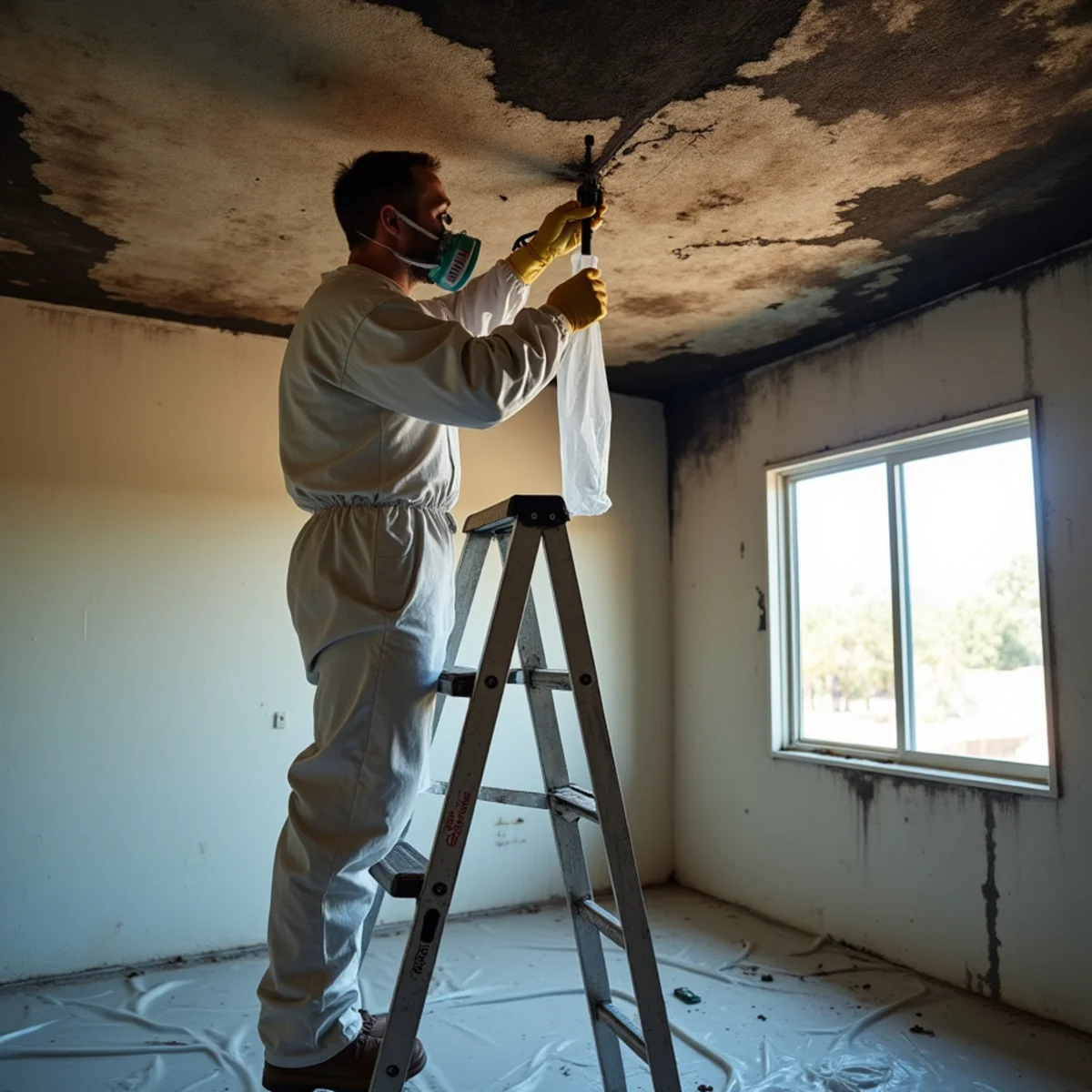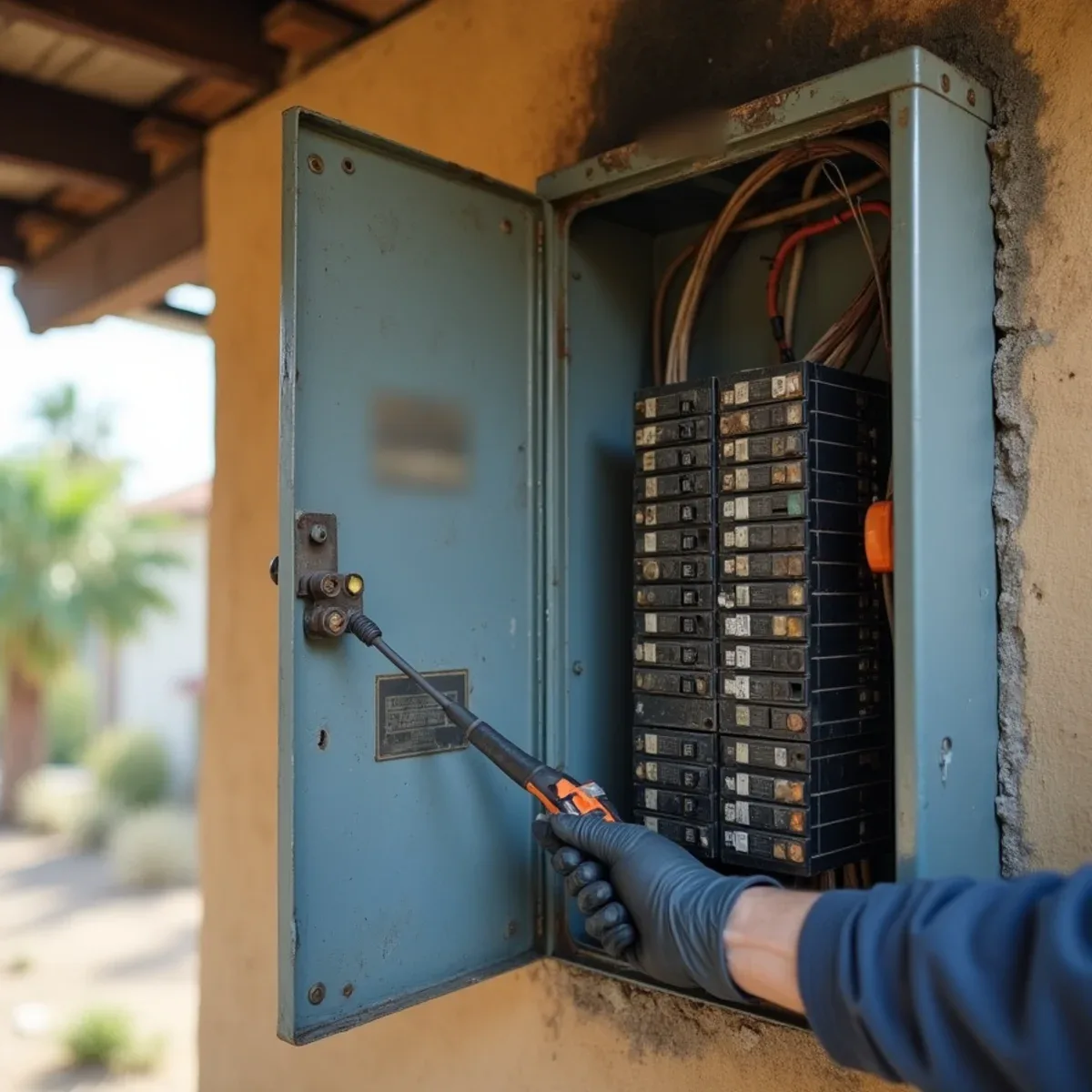
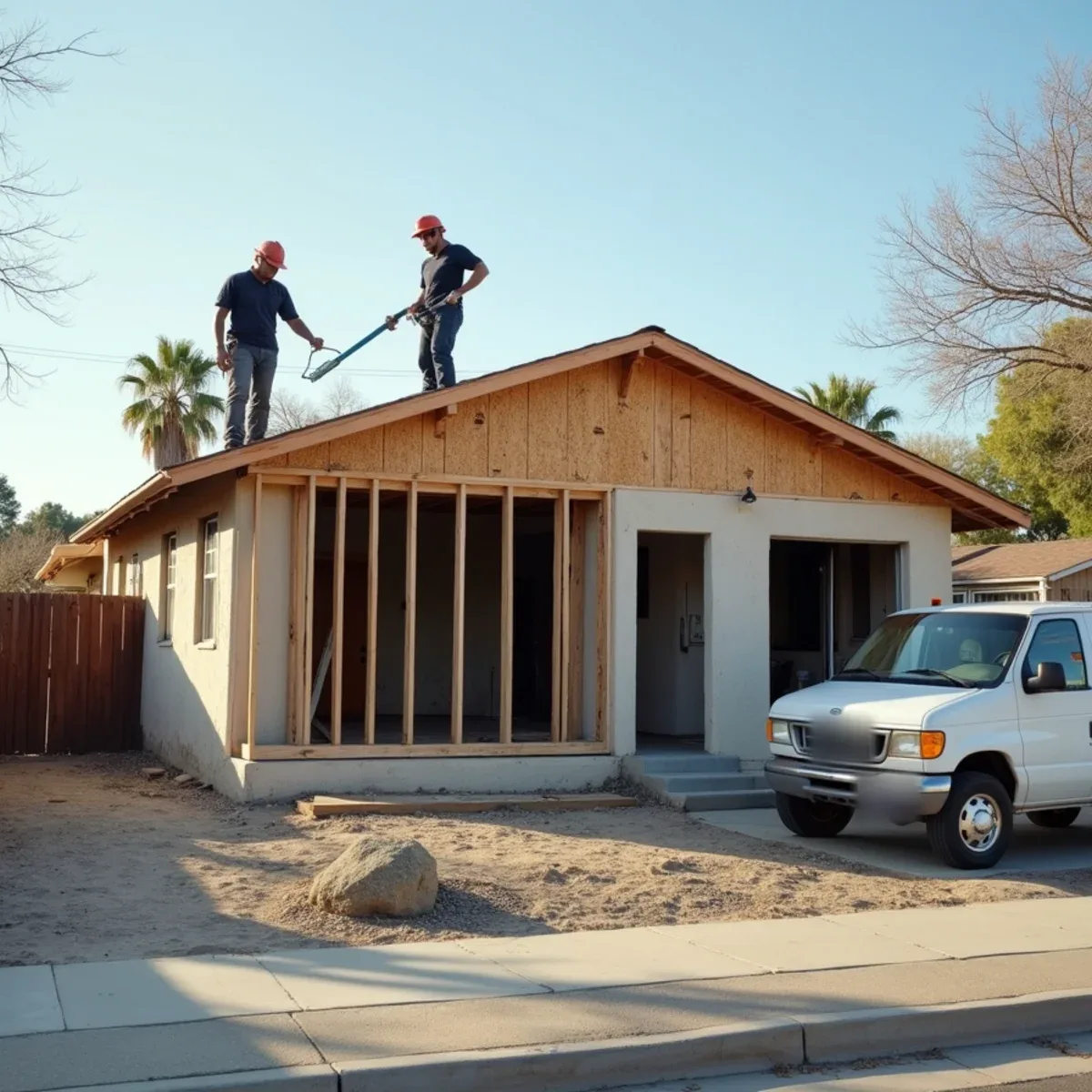
Reconstruction turns a cleaned, dried shell back into a house you can live in. In Buena Park that usually means a 1950s or 1960s wood-frame ranch home, with the burn concentrated in a garage, a kitchen or the attic, and smoke and hose water spread well beyond it.
Rebuild work is done by licensed contractors; Buena Park Fire & Water Damage Pros connects you with independent fire restoration contractors who perform it. Call (831) 303-1192 for a site visit and a written scope and price before work starts.
Reviewed by the Buena Park Fire & Water Damage Pros team · Updated · Process references: ANSI/IICRC S700 practices, South Coast AQMD Rule 1403, CSLB contractor rules
The short answer
Fire damage reconstruction starts after board-up, cleanup and drying. Licensed contractors assess framing, trusses and roof decking, complete the Rule 1403 asbestos survey, remove what cannot be saved, replace damaged wiring, plumbing and ducts, pass City of Buena Park inspections, then close walls and finish. The insurance scope and supplements set what gets paid.
From cleanup to rebuild: where reconstruction starts
A fire job runs in stages: board-up and tarping, water extraction, contents pack-out, then smoke and soot cleaning of what stays. Reconstruction begins when the building is stable, dry and clean enough to measure. If the house is still open to weather, start with emergency board-up and roof tarping.
Starting too early is the most expensive mistake on a fire job. Drywall hung over wet or smoky framing has to come out again. A good scope keeps cleaning, demolition and new construction on separate lines so you can see which is which.
Mitigation and construction are separate scopes
Mitigation stops the damage from growing. Construction puts the house back. Even when one company does both, a broad rebuild contract signed the night of the fire prices walls nobody has opened yet. Ask for four scopes instead:
- Stabilization: board-up, tarping, water extraction and drying.
- Cleaning: soot and smoke removal, odor work and the duct review.
- Contents: pack-out, cleaning, storage and the inventory (see contents cleaning and pack-out).
- Rebuild: demolition, framing, systems, permits and finishes, priced after the structure is opened and measured.
When a fire job needs reconstruction, not just repairs
Every fire job ends with some repair work. It becomes reconstruction, with permits, inspections and licensed trades, when the damage reaches the structure or the systems inside the walls:
- Framing, rafters or trusses are charred past the surface, or a beam sags when probed.
- The roof was burned through or cut open for ventilation and the decking has to be replaced, not just tarped.
- Wiring, plumbing or ducts ran through burned walls, so circuits and lines have to be replaced and inspected before the walls close.
- Hose water soaked the structure, and drywall, insulation or flooring came out during drying.
- An asbestos survey found material that has to be abated before the room can be rebuilt.
- A garage, kitchen or room is gutted, rather than smoke-stained.
On the other end of the scale, paint, new carpet and a replaced ceiling panel in a smoke-only house are repairs that follow the cleaning. The scope should label which kind of job you have, because it changes the timeline, the permits and the paperwork.
What fire damage reconstruction includes
A rebuild scope lists each trade and stage, so nothing falls between the cleanup crew and the builder. Depending on the damage, it covers:
- Structural assessment of framing, trusses and roof decking, with a list of members kept, reinforced or replaced.
- Asbestos survey coordination before demolition, and sequencing around abatement if anything tests positive.
- Selective demolition and haul-off of charred, soaked or smoke-saturated material only.
- Moisture readings showing the structure is dry before insulation and drywall go in.
- Framing, roof decking and roofing repaired or replaced to current code.
- Electrical, plumbing and HVAC replaced or repaired by licensed trades, with rough inspections passed.
- Insulation, drywall, texture and paint, matched to the surrounding rooms where only part of the house was rebuilt.
- Finishes: doors, trim, cabinets, counters, flooring and fixtures, from the agreed allowance or the insurer's scope.
- Permits, inspections and final sign-off with the City of Buena Park, plus closing photos for your claim file.
Our fire damage reconstruction process, step by step
Each stage has a clear hand-off, and the next one does not start until the last one is documented:
- Confirm the house is ready. Cleaning is finished, drying readings are in, and any asbestos abatement is cleared.
- Measure and scope. The contractor opens what is needed to see the structure, then writes the rebuild scope line by line.
- Reconcile with the insurance estimate. Differences are documented with photos and sent to the adjuster as a supplement.
- Pull permits with the City of Buena Park's building division and order long-lead items such as windows and cabinets.
- Structure and rough-in. Framing, decking, roofing, then electrical, plumbing and HVAC, followed by rough inspections.
- Close up. Insulation, drywall, texture and primer, with odor-blocking primer on any framing that held smoke.
- Finish and final. Cabinets, flooring, trim, paint and fixtures, the final inspection, and a walk-through against the scope before the last payment.
Structural assessment: framing, trusses, roof decking and what can be saved
Charred wood is not automatically ruined. The assessment measures how much sound wood is left: crews scrape or probe the char down to firm wood and compare what remains with the original size of the stud, joist or rafter.
Framing
Surface char can often be soda or dry-ice blasted and sealed with an odor-blocking primer. Char that has eaten into the cross-section means sistering a new member alongside or replacing it. When a bearing wall, beam or ridge is involved, a structural engineer usually specifies the repair.
Trusses
Some tract homes of that era are stick-framed with rafters; others use prefabricated trusses joined by metal gusset plates. Those plates grip with teeth pressed into the wood, and heat can loosen them even when the lumber looks fine. Heat-exposed trusses are usually replaced or repaired to an engineered design, not patched on site.
Roof decking
Older ranch roofs often sit on spaced board sheathing or early plywood. Decking that is charred, cut open by firefighters for ventilation, delaminated or soft from hose water is replaced; smoke-stained but sound decking is cleaned and sealed.
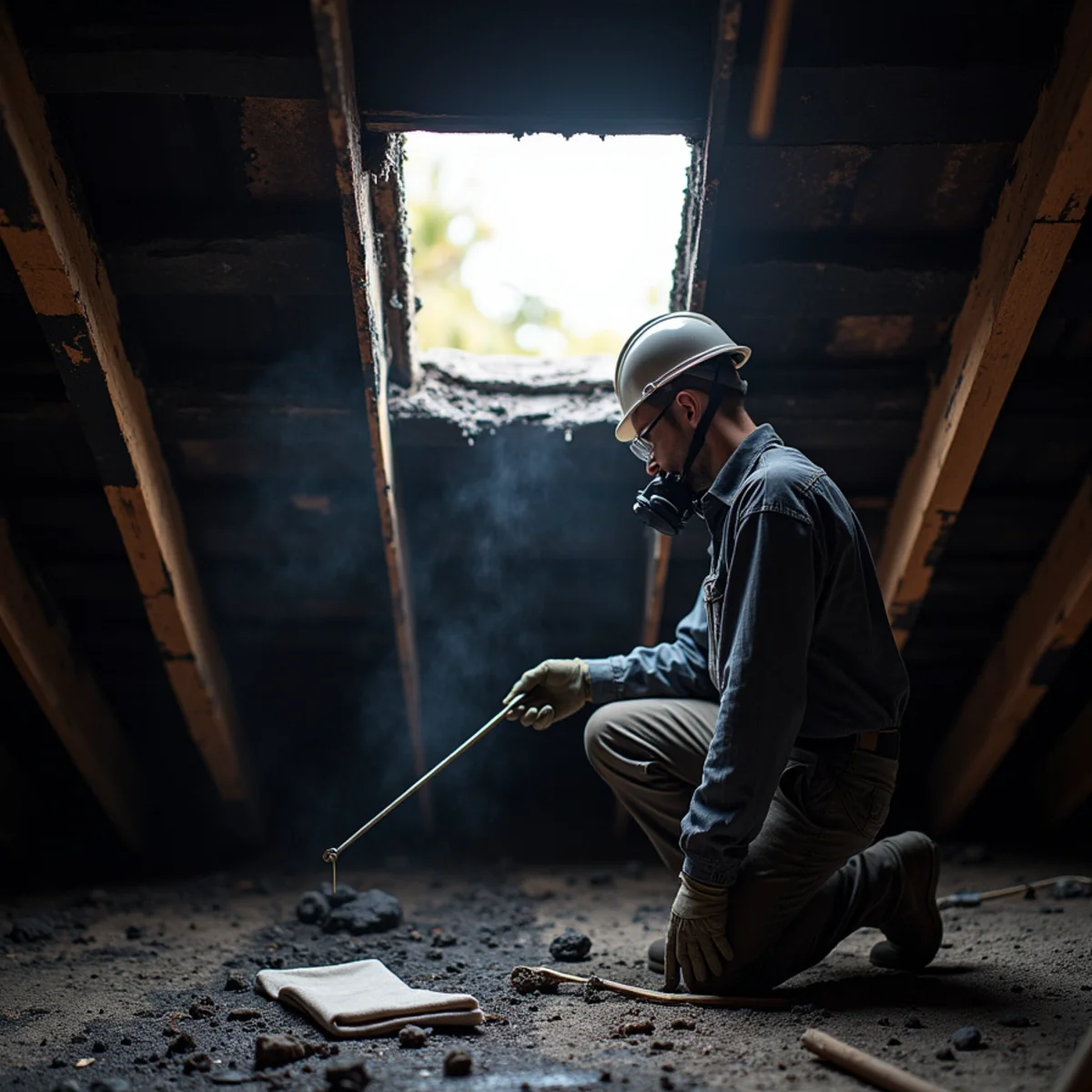
Selective demolition and the asbestos survey (South Coast AQMD Rule 1403)
Selective demolition removes only what cannot be saved: charred framing, smoke-soaked insulation, drywall past the clean line, soaked flooring. Keeping sound structure keeps the rebuild smaller.
Before any of it, South Coast AQMD Rule 1403 requires an asbestos survey, whatever the building's age. The single-family exception covers disturbing less than 100 square feet, which a garage ceiling exceeds. With a median build year of 1965, Buena Park homes often have suspect joint compound, popcorn ceilings, sheet vinyl and duct wrap.
Positive samples go to a separately certified and registered abatement contractor first. In pre-1978 homes, cutting painted surfaces falls under the EPA RRP lead rule. Buena Park Fire & Water Damage Pros does not offer asbestos or lead abatement. Read more on asbestos surveys after a house fire.
Water from firefighting: drying the structure before anything is closed up
OCFA hose lines can put a lot of water into a house in minutes. It runs into wall cavities, soaks insulation and subfloor, and sits on the slab under flooring after the surface looks dry.
Dehumidifiers and air movers run while framing, sill plates and slab are read with moisture meters until they match dry reference readings elsewhere in the house. Insulation and drywall go in only after that. Materials closed up wet can grow mold and hold smoke odor, so keep the moisture log in your job file.
Electrical, plumbing and HVAC replacement after a fire
Systems inside burned or heat-exposed walls are replaced more often than repaired, because the damage hides.
- Electrical. Heat softens wire insulation and damages boxes and breakers beyond the scorched area. Homes this age may still have the original panel, and the rebuild is a natural time to replace it. New circuits must meet current code, which can add arc-fault and ground-fault protection. See electrical fire risks in older homes.
- Plumbing. Plastic drain lines melt, and supply lines in burned walls are replaced. If the gas was shut at the meter, SoCalGas restores service.
- HVAC. Attic flex duct melts or fills with soot, and a furnace in a smoke-filled garage may need replacing. Heat-exposed ducts are replaced, not cleaned.
Each trade has its own license classification (C-10 electrical, C-36 plumbing, C-20 HVAC), usually coordinated by a B general building contractor.
Permits and inspections with the City of Buena Park
Structural repairs, roofing, wiring, plumbing and HVAC replacement generally need permits from the City of Buena Park's building division. Purely cosmetic work may not, but the city decides, so ask before assuming.
The licensed contractor normally pulls the permit and schedules inspections, typically while framing and rough systems are still exposed and again at final. Ask who is pulling it before work starts, and keep the signed-off records for your insurer and any future buyer.
Check the license on the CSLB record before you sign
On the Contractors State License Board's online license check, search the company name or license number and read four things:
- Status. Active, not expired or suspended.
- Classification. It should fit the work. A B general building contractor usually runs a multi-trade rebuild; a roof-only job can go to a C-39 roofing contractor.
- Bond. California requires a $25,000 contractor bond, and the record shows whether one is on file.
- Workers' compensation. The record lists the company's coverage, or its exemption if it has no employees.
Then ask which subcontractors will do the electrical, plumbing, roofing and HVAC work under the permit, and look up their licenses too.
Garage, attic and single-room rebuilds in ranch homes
Most Buena Park rebuilds are not whole houses. A single-story ranch home with an attached garage and one open attic decides how damage spreads, and the rebuild follows those lines.
Garage fires
Dryers, freezers, chargers and stored fuel make the garage a common origin. The rebuild covers framing, the ceiling and roof above, circuits and often the water heater. The wall and door to the house are rebuilt to current fire-separation rules: gypsum board on the garage side and a solid or fire-rated, self-closing door.
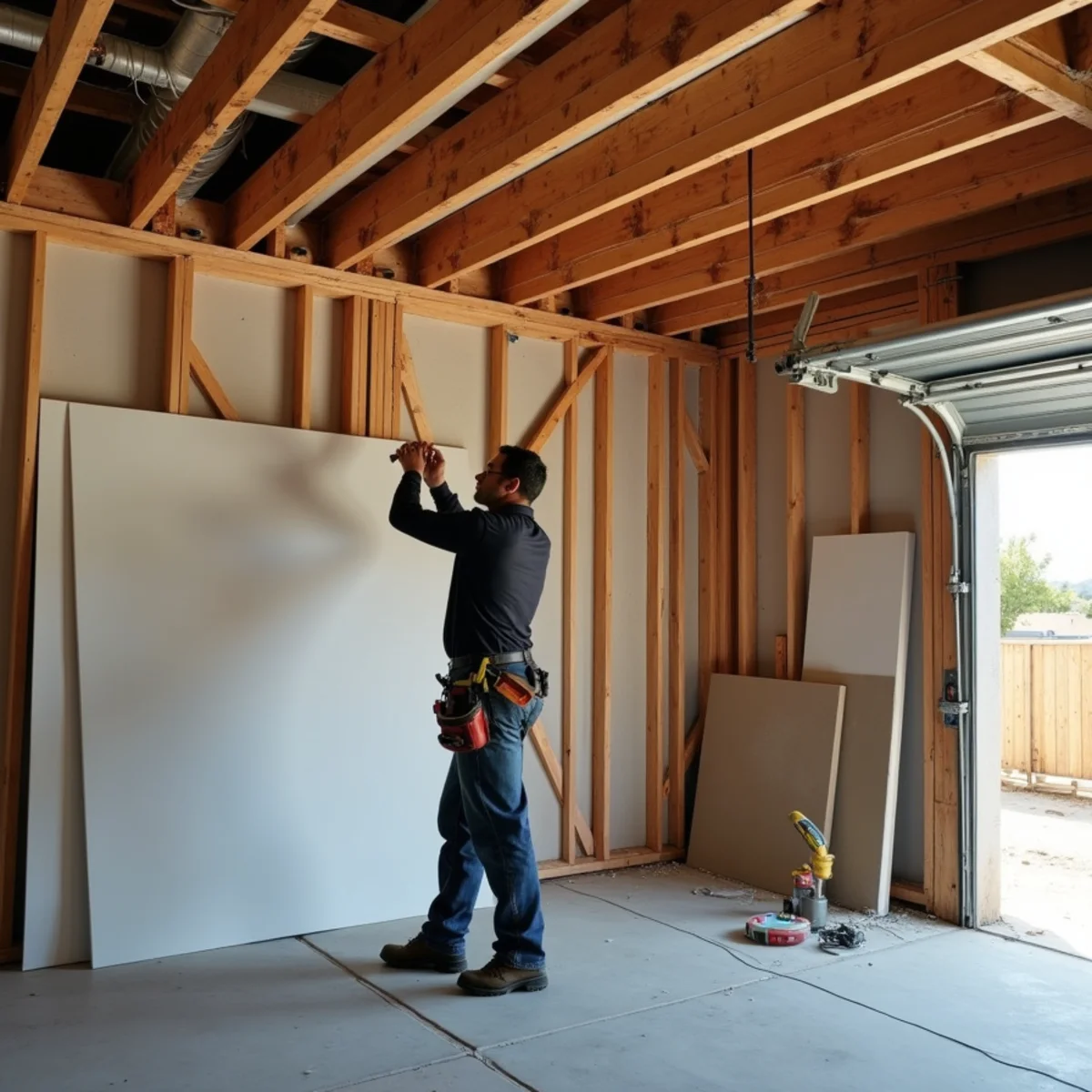
Attics, kitchens and single rooms
An attic fire usually means new rafters or trusses, decking, roofing, insulation, ducts and the ceiling below, plus smoke cleaning across the rest of the shared attic. A kitchen rebuild adds cabinets, counters and appliances; the cleaning that comes first is on our kitchen fire cleanup page.
What affects the cost of fire damage reconstruction
Rebuild prices come from measured quantities, not a per-room guess. The biggest drivers:
- How much structure is replaced: a few studs and a ceiling, or rafters, decking and roofing across the attic.
- Systems inside the walls. Rewiring a 1950s or 1960s house to current code, new drain lines, or a new furnace and ducts.
- Asbestos and lead findings, which add abatement and can add weeks before rebuilding starts.
- Code upgrades triggered by permitted work, such as smoke and carbon monoxide alarms and electrical protection.
- Finish level and matching. Matching a half-replaced kitchen or an older texture costs more than a clean replacement.
- Material lead times and access, such as custom windows or a two-story apartment unit with limited staging.
For published planning ranges, read how much fire damage restoration costs in Orange County. Your own number arrives in writing after the structure is opened and measured.
Working from the insurance scope: estimates, supplements and code upgrades
Your adjuster's estimate is what the insurer believes the repair costs. The contractor's scope is what the job needs. They rarely match at first, and lining them up item by item is normal.
- Estimates. Compare quantities, materials, and whether demolition, drying, permits and haul-off are included.
- Supplements. Demolition often uncovers hidden damage, such as charred framing behind intact drywall. The contractor documents it with photos and submits a supplement; agree up front how those are handled.
- Depreciation. Many replacement-cost policies pay actual cash value first and release the withheld depreciation once repairs are complete. Keep invoices and inspection sign-offs.
- Code upgrades. A standard policy restores what was there. Ordinance or law coverage, if you have it, pays the added cost of meeting current code, up to its limit.
Contract terms to get in writing
- Bids side by side. Compare line items, not totals: quantities, materials, demolition, haul-off, drying and permits. A low number often leaves one out.
- Change orders. What triggers one, such as charred framing behind sound drywall or a failed inspection, and that each comes with a price and your signature before the work.
- Payment milestones. Each payment falls due when a stage is done (demolition, rough inspection passed, drywall hung, final sign-off), not as a large sum up front.
- Warranty. What the workmanship warranty covers, what it excludes, how long it runs and who you call. A spoken promise is not a warranty.
Crews provide photo documentation and an itemized scope and can meet the adjuster on site. Negotiating the claim stays with you or a licensed public adjuster you hire, and you choose the contractor; your insurer cannot require you to use theirs. That rule comes from 10 CCR 2695.9 in California's Fair Claims Settlement Practices Regulations, and it covers referrals too: an insurer that names a contractor has to state in writing that you are free to go elsewhere. Every fire restoration crew we send is licensed where California requires it, and insured. Call (831) 303-1192 to schedule a walk-through.
Crews also cover fire damage repair in La Palma, fire rebuilds in La Mirada and fire restoration in Cerritos, plus every fire restoration service area around Buena Park.
Why Buena Park calls Fire & Water Damage Pros for fire damage reconstruction
Licensed contractors, checked by you
Rebuild work is done by licensed contractors, and you get the license details to verify on the CSLB lookup before you sign.
Cleanup and rebuild kept separate
Stabilization, cleaning, contents and construction are separate written scopes, so the rebuild is priced after the structure is measured.
Built for 1950s and 1960s houses
Asbestos surveys, original wiring and older roof sheathing are planned for from the first walkthrough, not discovered mid-job.
Paperwork that matches the adjuster's
Photos, measured quantities and supplements in the format adjusters review, with payments tied to finished stages.
Every fire restoration crew we send is licensed where California requires it, and insured.
Fire Damage Reconstruction: common questions from Buena Park
How long does it take to rebuild after a house fire?
A single garage or kitchen is usually measured in weeks and a whole house in months. The schedule depends on the asbestos survey, drying, agreement on the insurance scope, permit review and inspections, and lead times for materials. Ask for a written schedule by stage, with a milestone for each phase, such as demolition finished, rough inspection passed and walls closed, instead of one finish date, and ask how the dates move if hidden damage turns up.
Do I need a permit to repair fire damage in Buena Park?
For most rebuild work, yes. Structural, roofing, electrical, plumbing and HVAC work generally needs a permit from the City of Buena Park's building division, with inspections before walls close and at final. The licensed contractor normally pulls it; confirm who is responsible.
Who does the rebuild, and are they licensed?
The rebuild is done by licensed contractors. California has no separate fire restoration license, but demolition and rebuild work generally requires a CSLB-licensed contractor, usually with a B General Building license. Check any contractor on the CSLB license lookup before you sign.
Will insurance pay for code upgrades?
Only if your policy includes ordinance or law coverage, and only up to its limit. Without it, a standard policy pays to restore what was there, and you cover the cost of meeting current code. Check your declarations page, and ask for code items listed separately in the scope.
Should I sign one contract for the cleanup and the rebuild?
Not on the first day. Board-up, drying and cleaning can be agreed right away, because they stop the damage from spreading. The rebuild should be priced after demolition shows what the framing, wiring and ducts actually need. Separate scopes let you compare bids, match each stage to the adjuster's estimate and choose a different contractor for the rebuild if you want.
Fire Damage Reconstruction beyond Buena Park
The same crews cover the cities around Buena Park, 5 to 20 minutes out by I-5, SR-91 and Beach Boulevard. See how fire damage reconstruction works in the housing stock of each city, or view all fire restoration service areas.