Electrical Fire Risks in 1950s and 1960s Orange County Homes
By Buena Park Fire & Water Damage Pros 6 min read
Quick answer
The main electrical fire risks in 1950s and 1960s Orange County homes are original panels whose breakers may not trip when they should, ungrounded two-prong circuits, aluminum branch wiring in some homes wired from the mid-1960s to the early 1970s, and circuits carrying far more load than they were built for.
Why homes from this era carry more electrical risk
Half the houses in Buena Park are older than 1965, the city's median build year, and about 57% date from the 1940s to the 1960s. La Palma filled in between 1960 and 1980, and La Mirada had more than 8,000 homes by the time it incorporated in 1960. Across that whole stretch, a lot of houses still run on the panel and wiring installed when they were new.
Those systems were sized for a household with a refrigerator, a washing machine and a few lamps. Today the same circuits feed microwaves, gaming computers, space heaters, window air conditioners on hot September afternoons and, more and more often, an EV charger in the attached garage. Original service in homes of this age was often 60 to 100 amps, well below what a modern household can draw.
Age alone does not make a house dangerous. Wiring that has been left alone, kept dry and never overloaded can last a long time. The risk comes from old components combined with modern demand and decades of amateur additions.
Original panels inspectors often flag
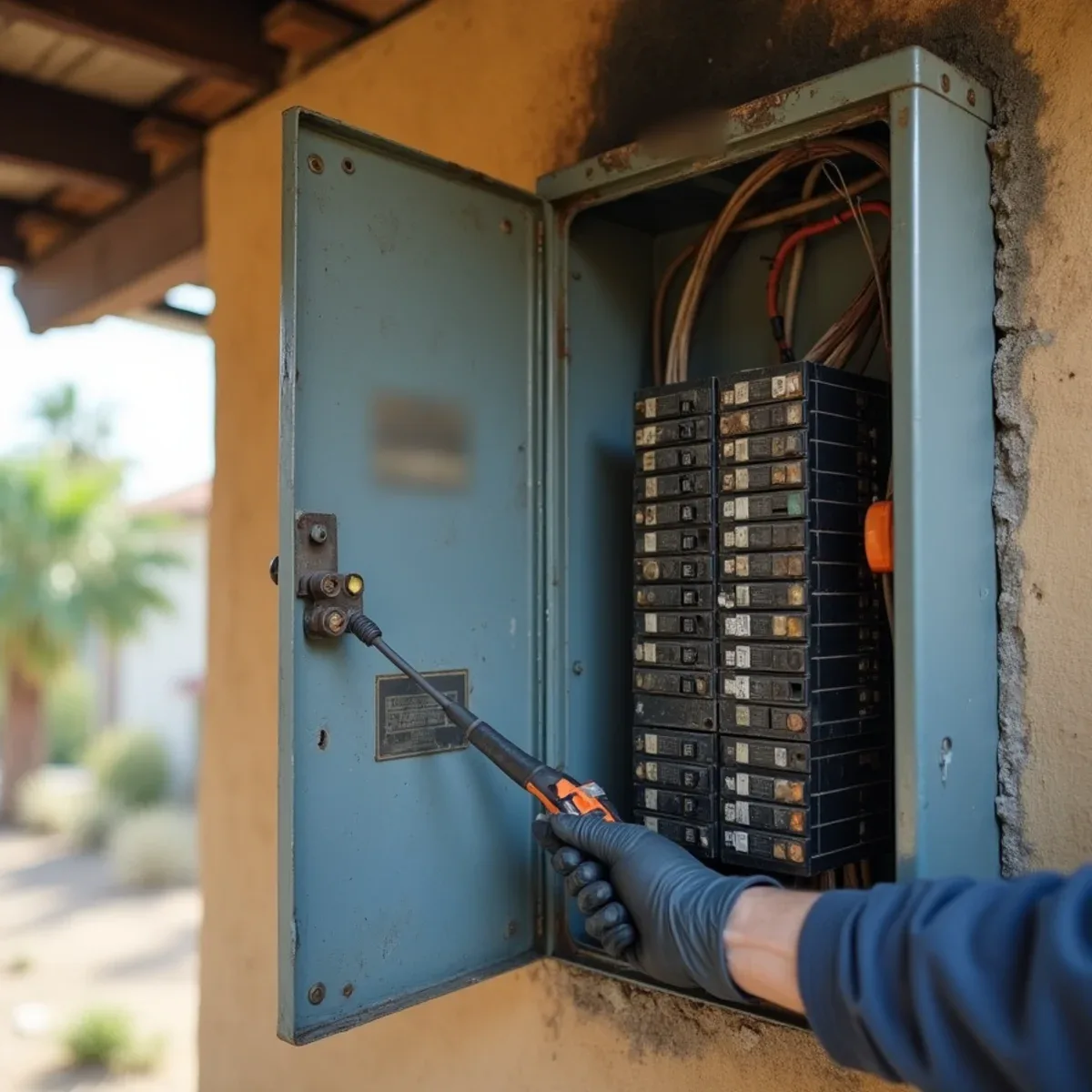
Two panel brands come up again and again in home inspection reports for houses of this era: Federal Pacific Electric panels with Stab-Lok breakers and Zinsco panels (some sold under the Sylvania name). Inspectors commonly recommend an electrician evaluate them because of long-running reports that some of their breakers may not trip reliably under overload, or may not hold firmly to the bus bar.
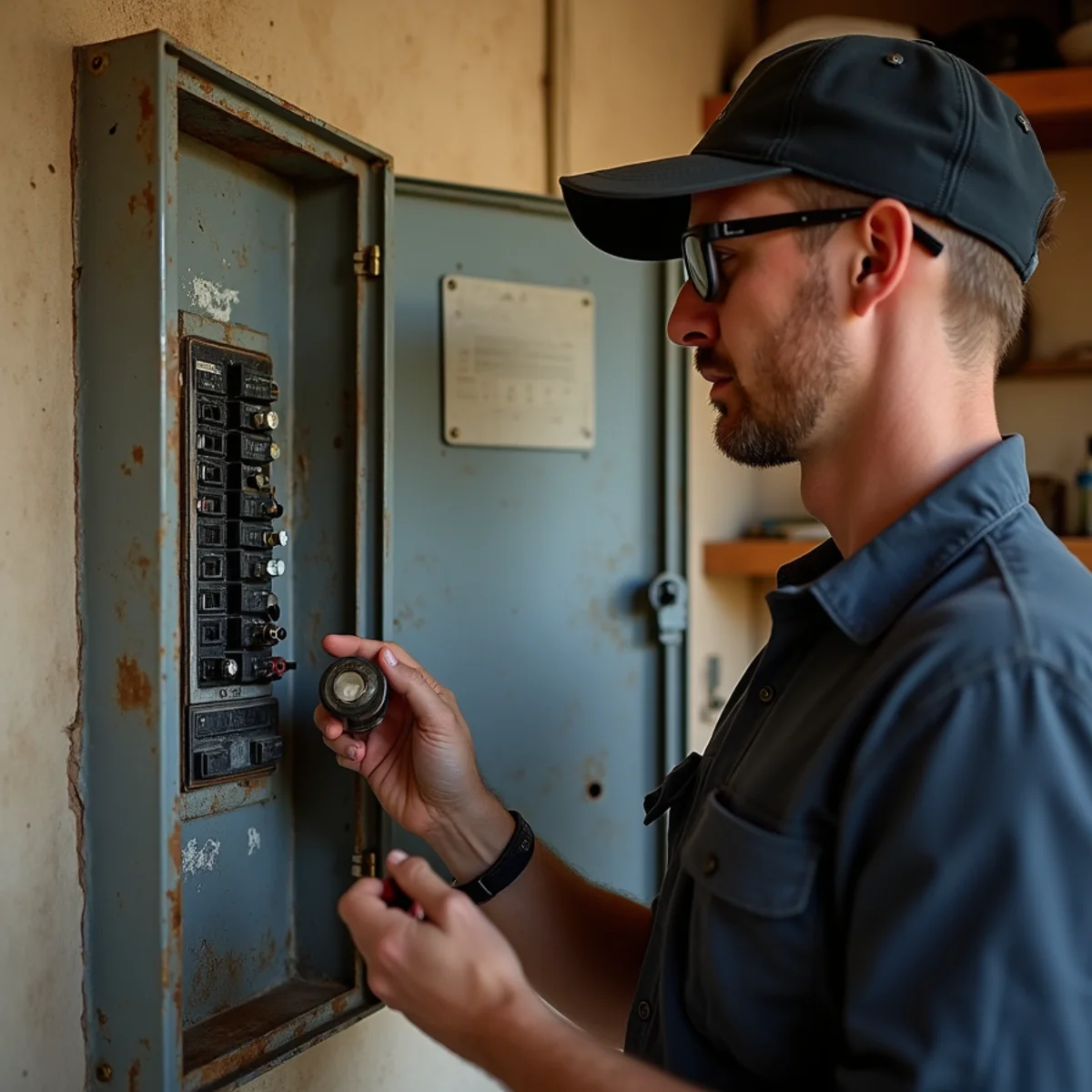
Having one of these panels does not mean a fire is coming. It means the panel deserves a closer look from a licensed electrician, and many owners choose to replace it rather than keep testing it. Some insurers also ask about panel type when writing or renewing a policy.
Other panel problems show up regardless of brand: two wires under one breaker screw, breakers larger than the wire they protect, rust from a leaking service mast, and old fuse boxes where someone has fitted an oversized fuse.
Wiring problems behind the walls
Ungrounded two-prong circuits
Three-prong grounded outlets did not become standard in new homes until the early 1960s, so many Buena Park houses still have two-prong outlets on circuits with no ground wire. Swapping in a three-prong outlet without a ground creates a false sense of protection. An electrician can run a ground or install GFCI protection labeled for ungrounded use, which code allows as an alternative.
Aluminum branch wiring
When copper prices spiked, mainly from the mid-1960s to the early 1970s, some builders wired outlets and switches with solid aluminum. The concern is the connections: aluminum expands and contracts more than copper, terminals loosen, and loose terminals overheat. The U.S. Consumer Product Safety Commission recognizes specific connector-based repairs that join copper pigtails to the aluminum at every connection.
Brittle insulation and attic heat
Older cloth-covered or rubber-insulated wire can crack after decades in an open attic that bakes every summer. Problems also cluster where past owners added circuits for a garage conversion, a patio room or a hot tub without a permit.
Warning signs and what they can mean
| What you notice | What it can mean | What to do |
|---|---|---|
| Burning or hot plastic smell, no visible source | Overheating wire or connection | Turn off that circuit at the panel and call an electrician today |
| Outlet or switch plate warm to the touch | Loose or failing connection | Stop using it and have it checked |
| Scorch marks or discoloration at an outlet | Arcing has already happened | Turn off the circuit; do not reuse the outlet |
| Buzzing or crackling from an outlet or the panel | Loose connection or failing breaker | Call an electrician promptly |
| Breaker that trips again and again | Overload or a fault on the circuit | Do not keep resetting it; find the cause |
| Lights dim when an appliance starts | Circuit or service near capacity | Ask about load and panel capacity |
Extension cords that stay plugged in for months, power strips plugged into other power strips and space heaters on old bedroom circuits are habits worth breaking in any house of this age.
Smoke alarms and AFCI protection
Working smoke alarms are the cheapest protection in an older house. California requires battery-only smoke alarms sold in the state to have a sealed battery rated for 10 years, which removes the dead-battery problem.
- Put alarms in each bedroom, outside sleeping areas and on every level.
- Test them monthly and replace any alarm that is 10 years old.
- During a remodel, ask about hardwired, interconnected alarms so one sounding sets off all of them.
Arc-fault circuit interrupters (AFCIs) are breakers designed to detect the arcing that loose or damaged wiring produces and shut the circuit off before it starts a fire. Current code requires them on many new and modified living-area circuits. Most homes built in the 1950s and 1960s have none, and an electrician can tell you whether your panel can accept them.
When to call an electrician
Electrical evaluation and repair is work for a CSLB-licensed C-10 electrical contractor. Check any company on the CSLB license lookup before hiring, and expect panel replacements and new circuits to be permitted and inspected through your city's building department.
- Call the same day for burning smells, scorch marks, warm outlets or buzzing.
- Schedule an evaluation if you have an original panel, a Federal Pacific or Zinsco panel, aluminum branch wiring or mostly two-prong outlets.
- Plan ahead before adding an EV charger, heat pump or major appliance, or when buying a postwar home.
From the job site: what electrical fires look like after the fact
Restoration crews see electrical fires from the other end: after the engines leave. The same starting points and the same missed warnings come up again and again in older north Orange County houses:
- The outlet behind the couch. A space heater or a stack of power strips on an old two-prong receptacle, hidden by furniture, is one of the most common origins. The wall above it usually shows a V-shaped scorch pattern.
- The garage circuit. A second freezer, a battery charger and power tools sharing one old circuit in an attached garage, which then sends smoke straight into the shared attic.
- A junction box in the attic. Splices made during long-ago remodels, sitting in attic heat for decades, can fail out of sight. These fires often smolder before anyone notices.
- Warnings that were noticed and explained away. Families often remember a switch plate that felt warm, a light that flickered when the microwave ran or a faint hot smell weeks before.
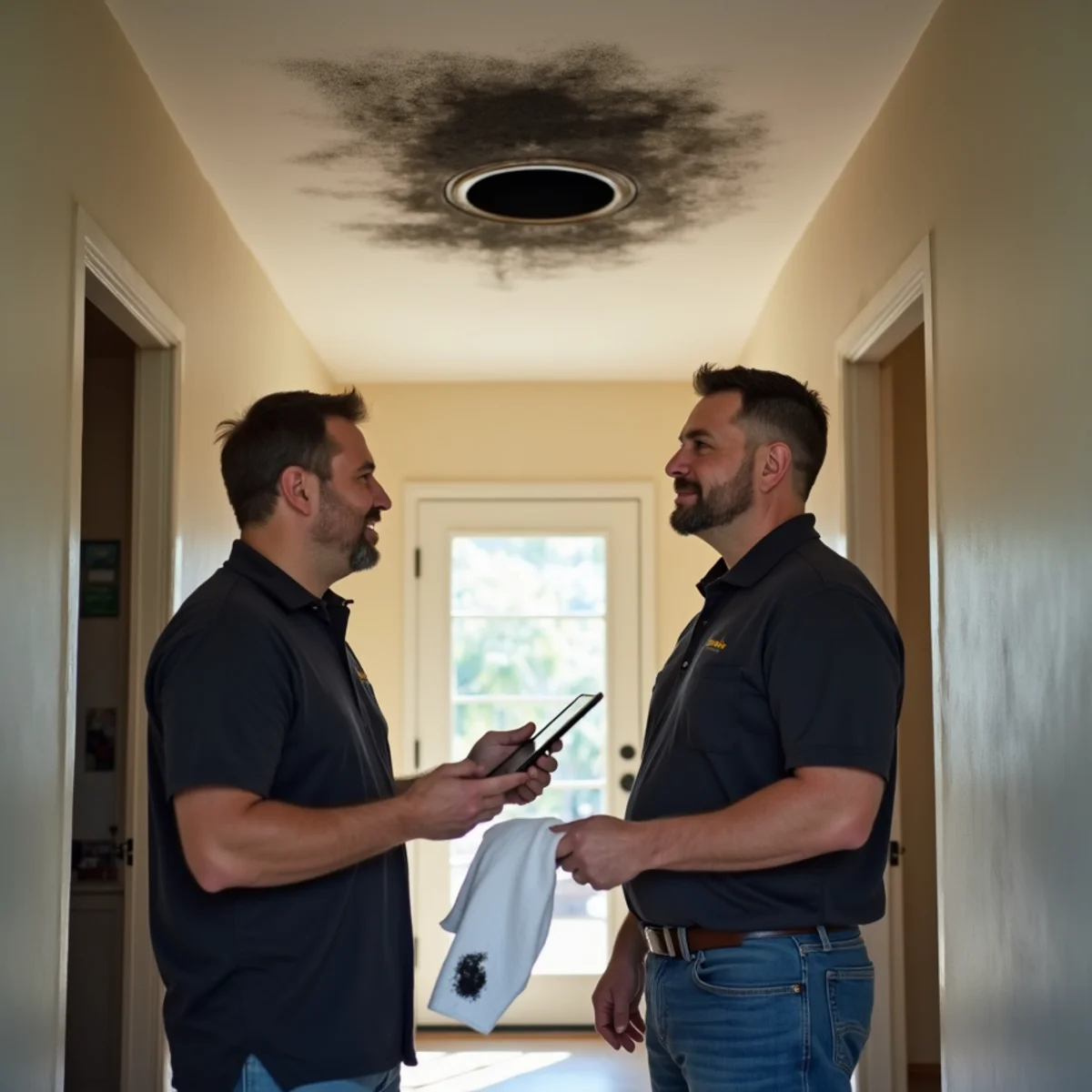
Aluminum branch wiring is the one problem with hard numbers behind it: the U.S. Consumer Product Safety Commission reported that homes wired with it were 55 times more likely to have connections reach fire-hazard conditions than homes wired with copper. Smoldering electrical fires also leave an oily, smeary residue that spreads farther than the scorch mark suggests, which is why cleanup reaches well beyond the outlet.
If an electrical fire happens
Get everyone out and call 911. Never use water on a fire involving live wiring. Only if the fire is very small and you have a clear exit, a multipurpose ABC extinguisher is rated for electrical fires. OCFA responds in Buena Park and La Palma; in La Mirada, it is the Los Angeles County Fire Department.
Afterward, power usually stays off in the damaged part of the house until an electrician repairs it and the work is inspected. Burning wire insulation and plastics leave a wet, acidic residue that can etch and corrode surfaces and electronics, so cleaning should start soon. Rewiring, framing and drywall replacement are handled through fire damage reconstruction by licensed contractors, after any required asbestos survey.
Call (831) 303-1192 for the nearest available crew to secure and clean the house, with a scope and price in writing before work starts. Every fire restoration crew we send is licensed where California requires it, and insured. Local details are on our La Palma fire and smoke restoration and La Mirada fire damage restoration pages, and what to do in the first day after a house fire walks through the next steps.
The bottom line on electrical fire risk
Warning signs include warm outlets, flickering lights, buzzing, burning smells and breakers that trip often. Have a licensed C-10 electrician evaluate the system, keep working smoke alarms on every level, and ask about AFCI protection. Most of these risks are found and fixed long before they become fires, as long as someone acts on the early signs.
If a fire has already happened, call (831) 303-1192 at any hour. Crews handle smoke damage cleanup of the oily residue a wiring fire leaves, and fire damage reconstruction after an electrician has cleared the circuits, in Buena Park, La Palma, La Mirada and nearby cities.
Related questions
Is a Federal Pacific or Zinsco panel automatically dangerous?
Not automatically. These panels are commonly flagged by home inspectors because of reports that some breakers may not trip reliably, so the usual advice is an evaluation by a licensed C-10 electrician. Many owners decide to replace them.
Is aluminum wiring in my house a fire hazard?
The risk sits mainly at the connections, where aluminum can loosen and overheat. It does not always mean rewiring the house: recognized connector repairs join copper pigtails to the aluminum at each outlet, switch and fixture. Have an electrician experienced with aluminum wiring assess it.
Does homeowners insurance cover an electrical fire?
Sudden fire damage, including fire from wiring, is usually covered under a standard homeowners policy, along with smoke and firefighting water. Terms vary, so read your own policy, and fix known electrical problems promptly.